
A new review from Tal Golan, Heiko H. Schütt, and Nikolaus Kriegeskorte, “Making models disagree to learn how brains compute,” has been published in Nature Reviews Neuroscience.
Neural network models provide a powerful way to express hypotheses about how the brain processes information, but their flexibility can make very different models appear similarly consistent with experimental data. The review explores an emerging solution: designing or selecting controversial stimuli that cause competing models to make different predictions.
By testing models where they disagree most strongly, researchers…
The lab has received a new grant from Meta for the Digital Brain Project, a multisite research collaboration with Western University and the University of Glasgow.
The project will use ultra-high-field 7T fMRI to collect detailed measurements of human brain activity, with the goal of advancing computational models of visual processing and better understanding how complex information is represented in the human brain.
We are excited to begin this collaboration and to work with our partners at Western and Glasgow on this ambitious new project!
Congratulations to Dr. Veronica Bossio, who successfully defended her doctoral thesis in May and received her PhD through Columbia’s Neurobiology and Behavior program!
During her time in the lab, Veronica’s research focused on the computational mechanisms underlying human face perception, using generative face models and probabilistic modeling to understand how we perceive characteristics such as face naturalness, similarity, and identity.
Veronica is now beginning a full-time position at Brooklyn Health, where she will continue applying computational approaches to research in health and clinical…
The lab received a new grant from the NIH/NIDA BRAIN Initiative, "Representational geometry: evaluating brain-computational models with neural activity data" in collaboration with the Wei Lab at the University of Texas
We’re excited to share that our lab has launched an official YouTube channel! This new platform will feature talks, tutorials, behind-the-scenes looks at our research, and highlights from our events. Our goal is to make our science more accessible and provide a space to share ideas with a broader community.
Check out our first videos and subscribe to stay updated as we continue to add new content.
This semester, we are delighted to welcome two new graduate students to the lab: Boran Wang from the Psychology Department and Kedar Garzón from the Neurobiology and Behavior Department. We’re excited for the expertise, energy, and fresh perspectives they will bring to our research!
We are excited to welcome Dr. Akihito Maruya, who joins the lab as a postdoctoral research scientist after receiving his PhD SUNY’s Graduate Center for Vision Research. Akihito brings valuable expertise and a fresh perspective to our research, and we look forward to the contributions he will make!
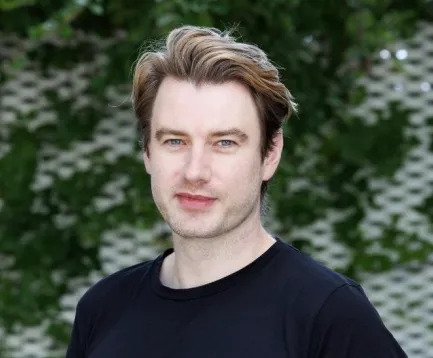
The David Marr medal recognizes the achievements of an outstanding vision scientist in the early part of their research career. The Appiled Vision Association invites nominations for this award every two year.
Paul was recognized for "his pioneering research on visual experience, particularly his psychophysical studies
challenging the role of vergence (eye rotation) in size and distance perception, his theoretical work developing new theories of 3D vision and the ‘perception’ / ‘cognition’ distinction, and his recent work developing new illusions of visual experience" by the AVA. …
The lab welcomes new postdoctoral researcher, Dr. Amir Farzmahdi, who joined January 16, 2025 to work on recurrent models of visual inference in the primate brain.
A new paper, “The topology and geometry of neural representations” led by Dr. Baihan Lin is now published in PNAS!
The lab welcomes postdoctoral researcher, Dr. Fan Cheng, who joined us on August 16th, 2024 to work on computational models of visual illusions.
The lab welcomes new graduate student, Pinyuan Feng, who joins us through the psychology department.