I want to learn more about..
Active Research Projects
Neural network modeling of visual perception and cognition
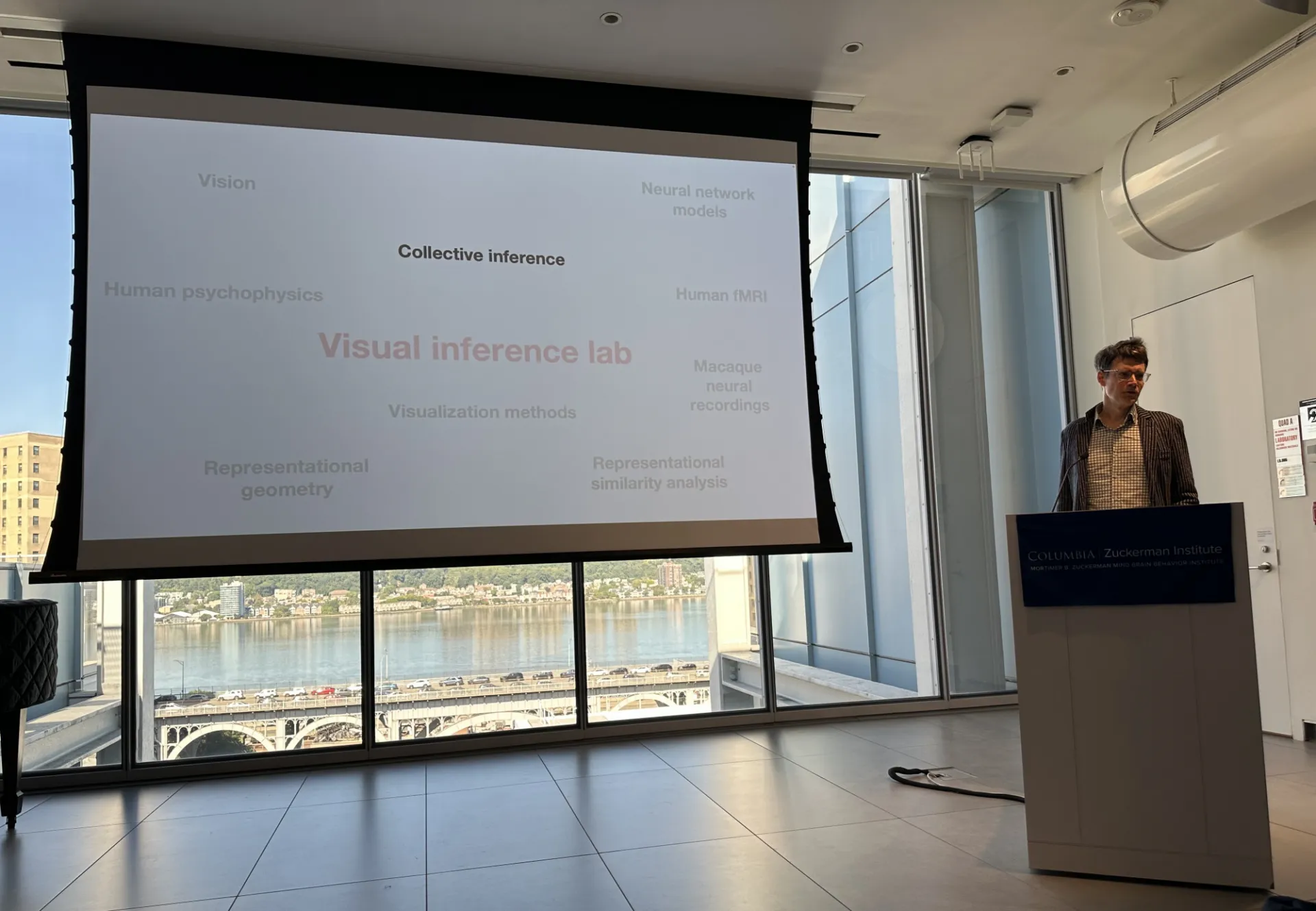
Recent advances in neural network modeling have enabled major strides in computer vision and other artificial intelligence applications. Artificial neural networks are inspired by the brain, and their computations could be implemented in biological neurons. We seek to develop neural network models that can meet real-world computational challenges faced by biological visual systems and that can also explain detailed patterns of brain and behavioral responses.
Development of statistical inference and visualization methods
Computational neuroscience is entering a new era, where big models meet big data. We develop statistical inference and visualization techniques that help us connect theory and experiment, enabling us, for example, to adjudicate among many candidate neural network models using brain-activity measurements acquired with functional imaging and electrophysiological recordings in animals and humans.
News
New Publication: Making Models Disagree to Learn How Brains Compute
A new review from Tal Golan, Heiko H. Schütt, and Nikolaus Kriegeskorte, “Making models disagree to learn how brains compute,” has been published in Nature Reviews Neuroscience.
New Grant from Meta for the Digital Brain Project
The lab has received a new grant from Meta for the Digital Brain Project, a multisite research collaboration with Western University and the University of Glasgow.
The project will use ultra-high-field 7T fMRI to collect detailed measurements of human brain activity, with the goal of advancing computational models of visual processing and better understanding how complex information is represented in the human brain.
Congratulations Dr. Veronica Bossio!
Congratulations to Dr. Veronica Bossio, who successfully defended her doctoral thesis in May and received her PhD through Columbia’s Neurobiology and Behavior program!
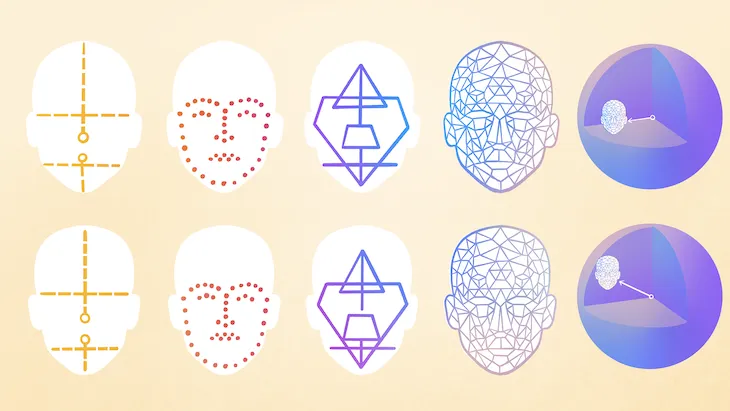
During her time in the lab, Veronica’s research focused on the computational mechanisms underlying human face perception, using generative face models and probabilistic modeling to understand how we perceive characteristics such as face naturalness, similarity, and identity.
Photos

Happy Halloween!
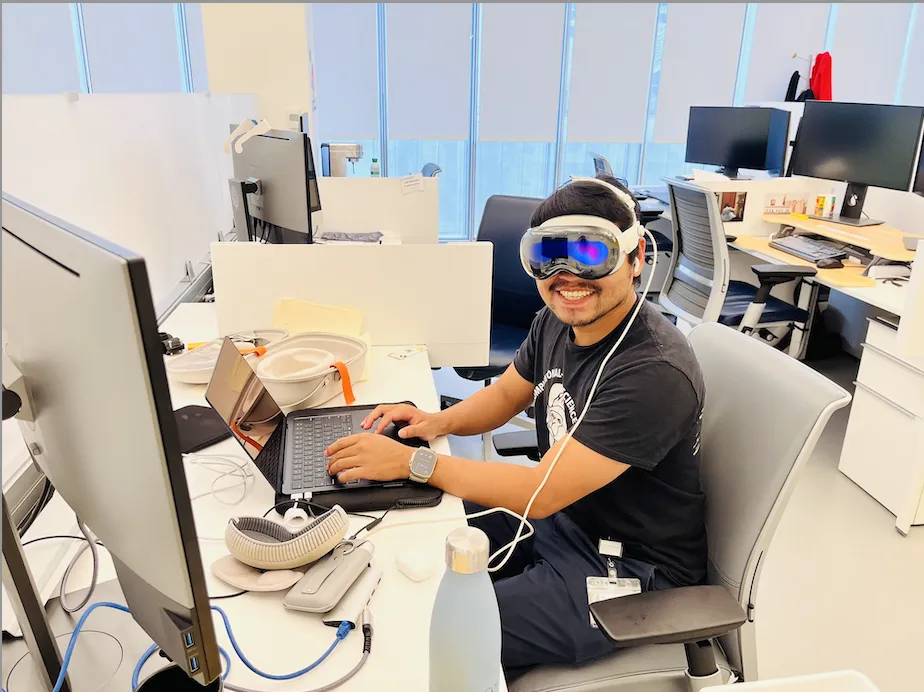
Who needs monitors? Not Akihito!
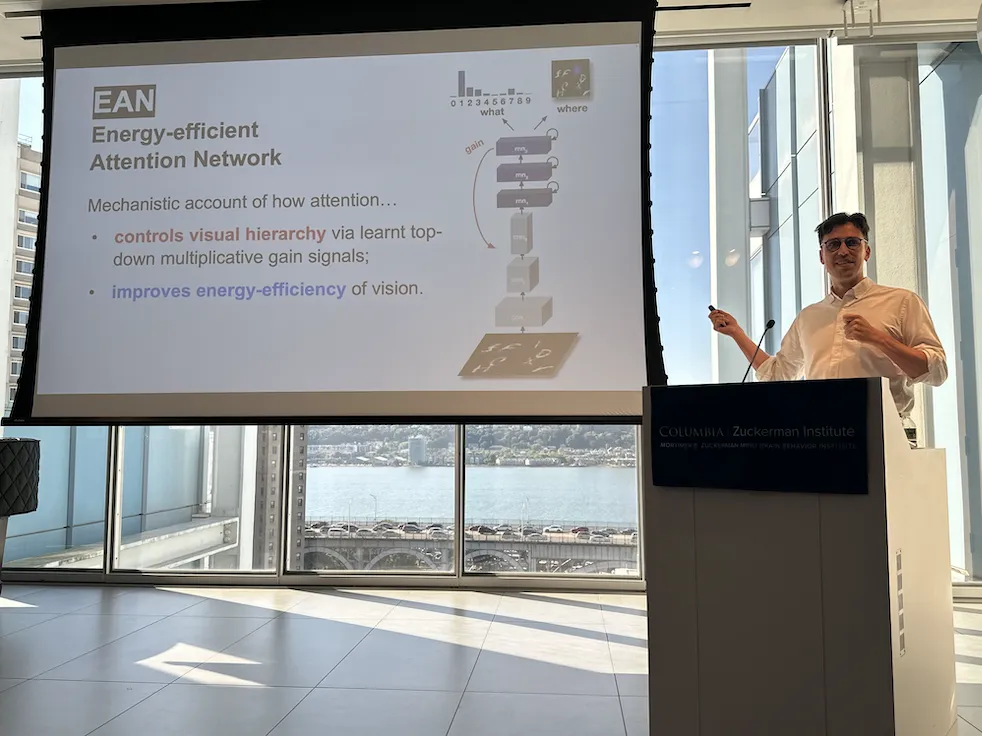
Eivinas presenting his work on EAN at ZIFest 2025