
Resources
Code, tutorials, and other resources produced by the lab are available here.
Controversial Stimuli
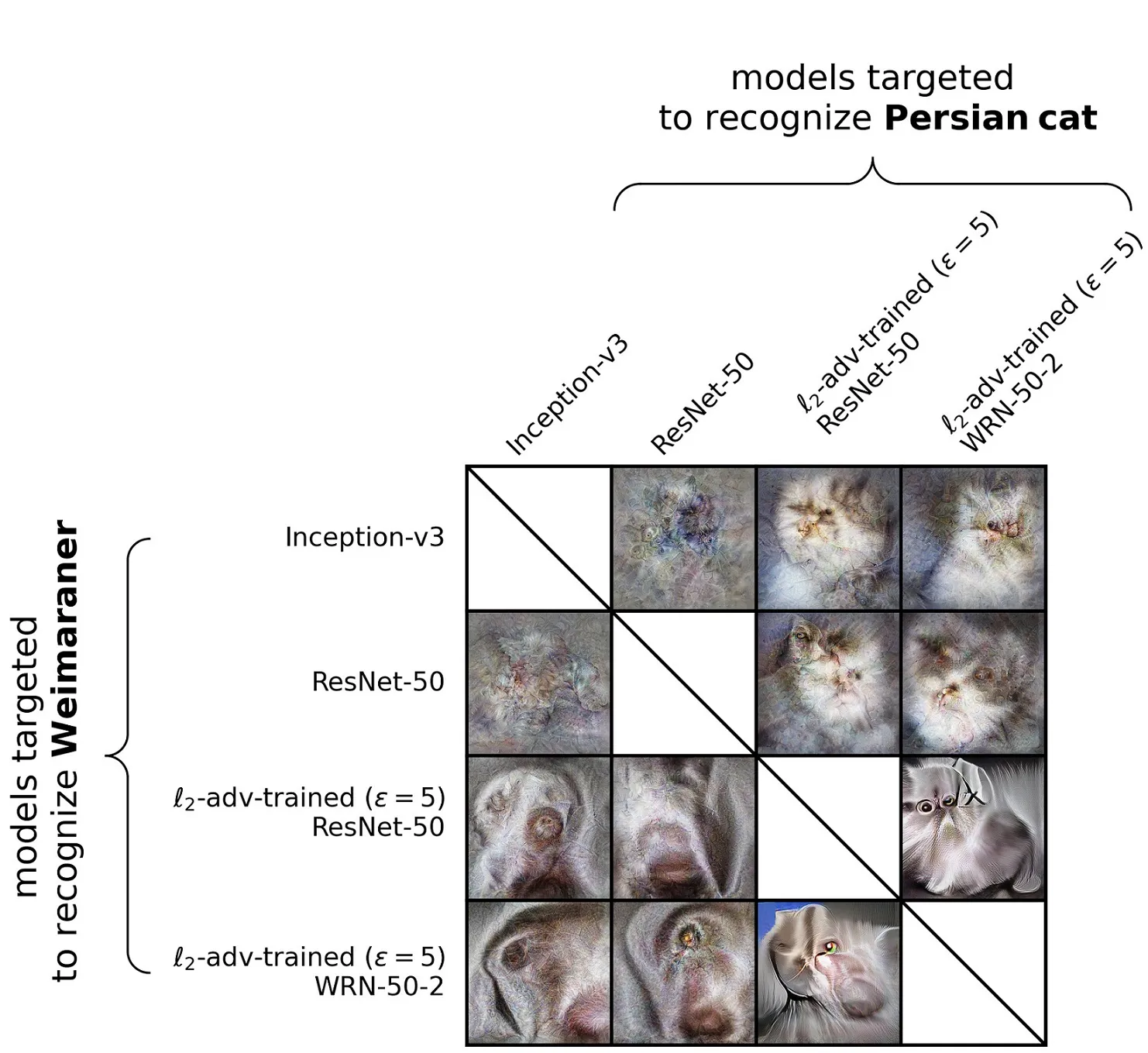
This is a PyTorch tutorial on optimizing controversial stimuli for ImageNet classifiers, which demonstrates the method introduced in Golan, Raju, and Kriegeskorte (2020).
Ecoset
Ecoset is a collection of over 1.5 million images from 565 basic-level categories selected to better capture the distribution of objects relevant to humans, and provides an alternative to ILSVRC 2012 that is openly available for research purposes. It was introduced in Mehrer et al (2021) and developed in collaboration with the laboratory of Tim Kietzmann (corresponding author).
Python Representational Similarity Analysis (rsatoolbox) toolbox
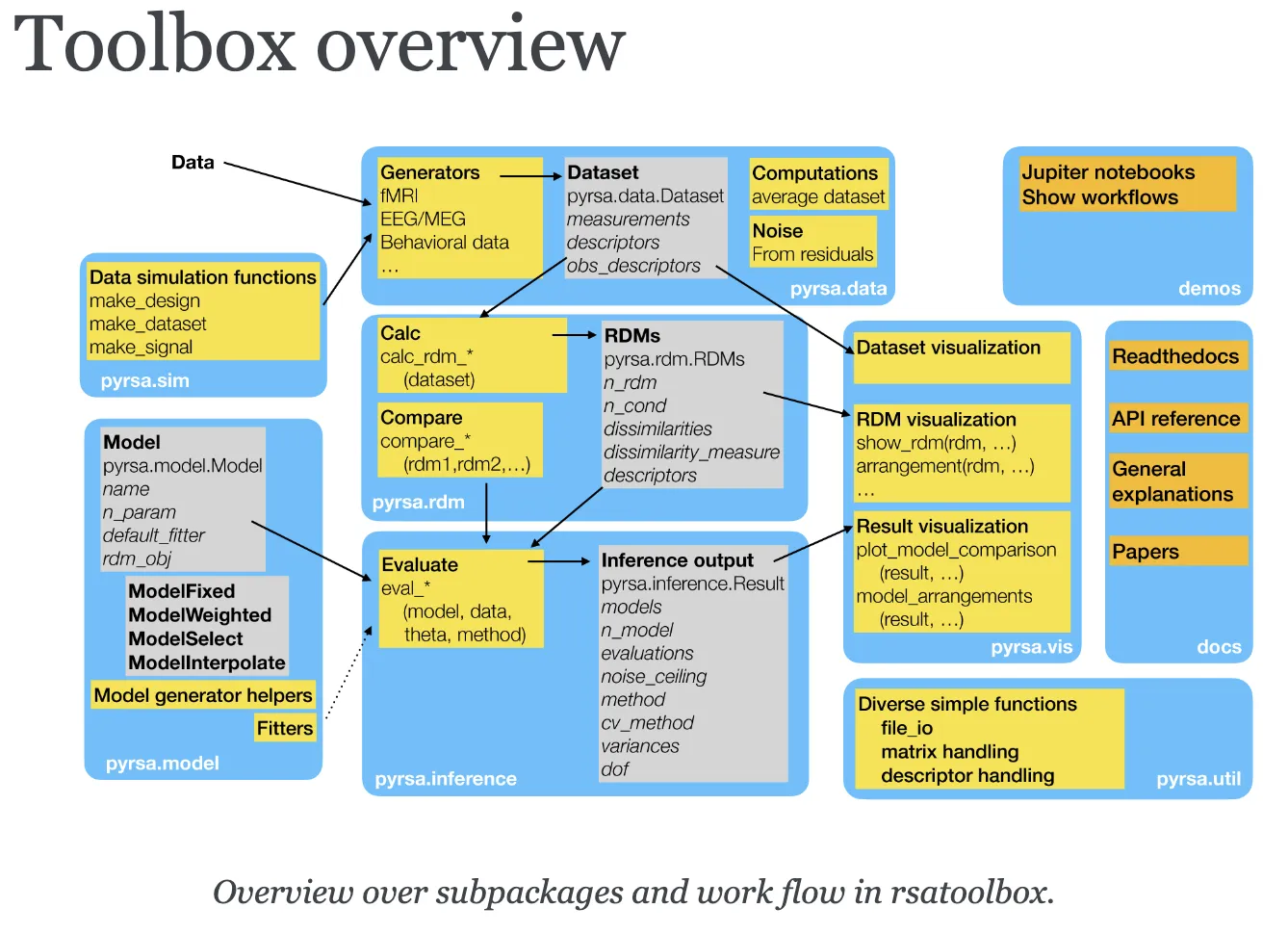
The rsatoolbox was developed by the labs of Nikolaus Kriegeskorte, Jörn Diedrichsen, Marieke Mur and Ian Charest. The toolbox replaces the 2013 matlab version the toolbox of rsatoolbox previously at ilogue/rsatoolbox and reflects many of the new methodological developments.
TorchLens
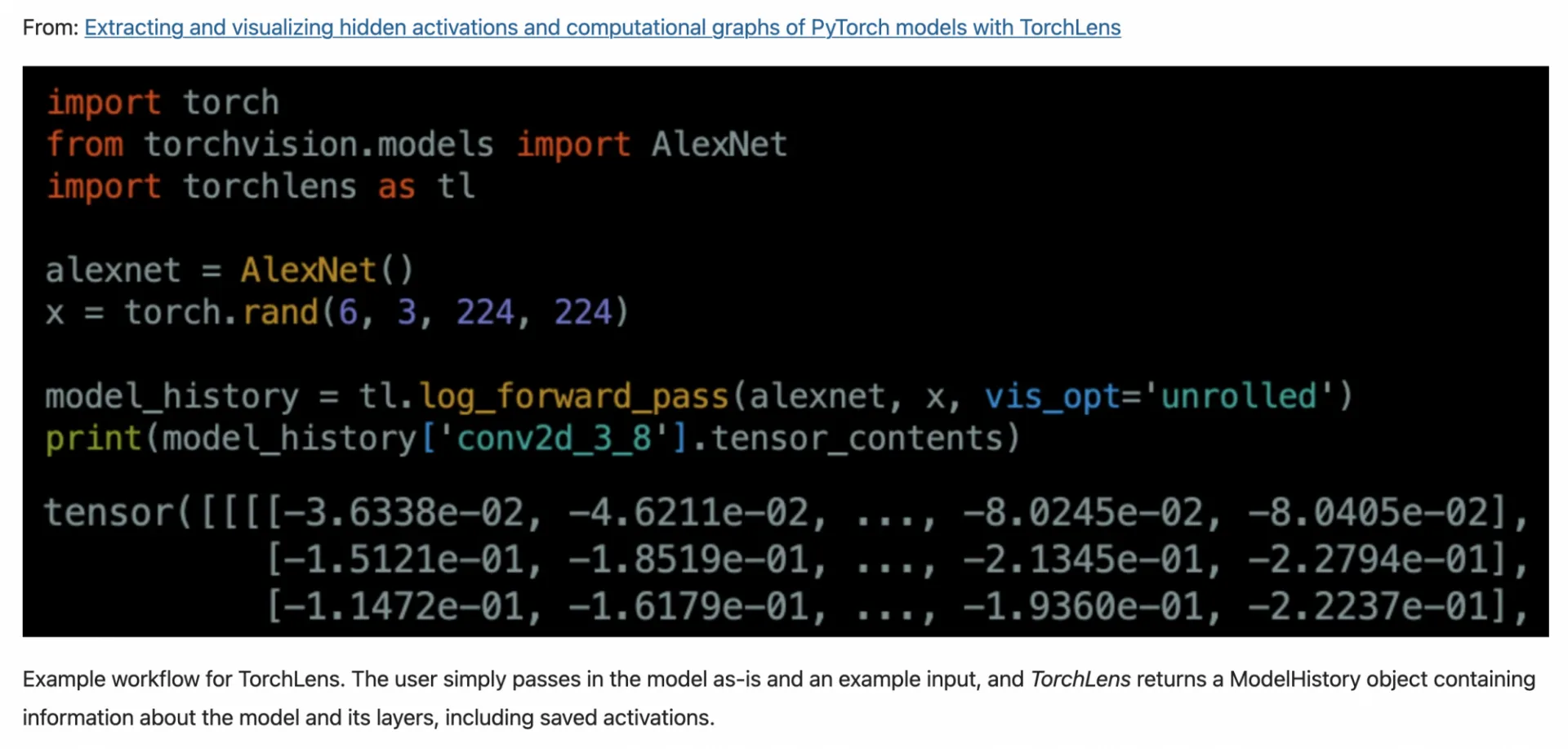
A new open-source Python package for extracting and characterizing hidden-layer activations in PyTorch models. This toolbox was developed by postdoctoral fellow JohnMark Taylor and detailed in his publication in Scientific Reports.
Our lab co-led the development of the "Comparing Artificial and Biological Networks" day for the NeuroMatch Academy NeuroAI course, an intensive, globally accessible summer program at the intersection of neuroscience and AI. We designed and built a suite of hands-on Jupyter notebook tutorials centered on representational geometry — a framework for comparing neural representations across brain areas, artificial networks, and both.
The tutorials walk students through using representational similarity analysis (RSA) to understand how networks generalize, how noise affects representational distances, and how to rigorously compare computational models to neural data:
- Tutorial 1: Generalization and Representational Geometry — Students explore how the geometry of a network's representations determines its ability to generalize, using standard and adversarially-trained networks on MNIST as a case study.
- Tutorial 2: Computation as Transformation of Representational Geometries — Students trace how representations evolve across the layers of deep networks, visualizing computation as a path through a space of representational geometries, and examining how adversarial inputs alter these paths.
- Tutorial 3: Statistical Inference on Representational Geometries — Students learn principled methods for comparing representational models to neural data, including cross-validated distance estimation and bootstrap-based inference that generalizes across stimuli and subjects.
- Tutorial 4: Representational Geometry & Noise — Students work through how measurement noise biases distance estimates, how Mahalanobis distance corrects for correlated noise, and why random projections (via the Johnson–Lindenstrauss lemma) can preserve representational structure in high dimensions.